




Road safety refers to the set of legislative, organizational, educational, and technical measures applied to ensure that road users travel with a minimum number of accidents and injuries. Defensive driving fits directly within this objective by actively preventing accidents.
Legislation creates the framework, while defensive driving is its practical application of each driver.
Anticipate the mistakes of others in traffic
- Maintaining a safe following distance is the first step in avoiding unpleasant situations. Keep a safe distance from the vehicle in front so that you have time to brake or avoid an unexpected obstacle.
- Keep your eyes on the road, not just on the car ahead. Watch intersections, mirrors, pedestrians, cyclists, and other road users, as well as the behavior of other drivers.
- Assume that other drivers may make mistakes. Anticipate risk signals such as sudden braking or inattentive driving, vehicles that do not use the turn signals, or pedestrians about to step onto a crosswalk.
Defensive driving in critical situations
The general formula to avoid accidents through defensive driving is: calm + anticipation + controlled braking.
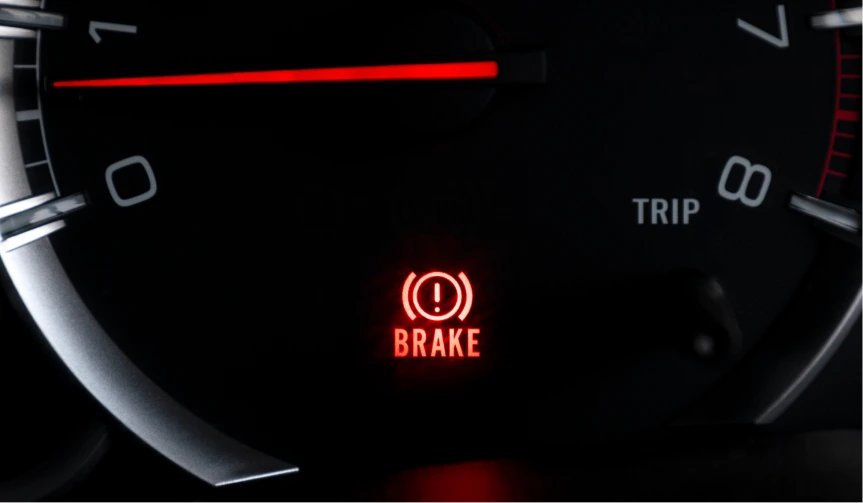
Emergency break
- Press the brake pedal firmly.
- Keep the brake pressed until the vehicle comes to a complete stop.
- If the vehicle skids sideways, steer the wheel in the direction you want to go.
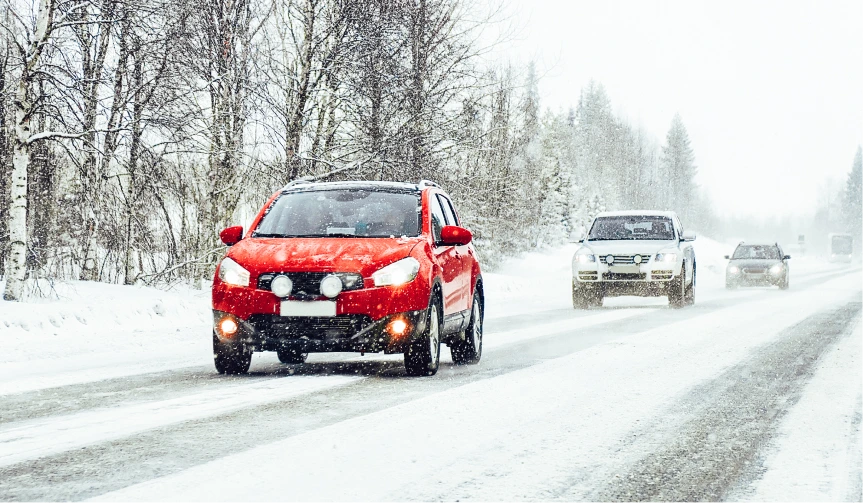
Black ice or ice
- Reduce speed well before the curve.
- Avoid sudden braking.
- Use motor braking to slow down.
Aquaplaning
- Lift your foot off the accelerator and allow the vehicle to slow down naturally.
- Hold the steering wheel firmly, without sudden movement.
- Gently steer toward the edge of the road or the emergency lane.
Reducing accident risk through defensive driving
- Respect the legal speed limit – excessive speed is the main factor in both the occurrence and severity of accidents.
- Use proper signaling when changing lanes, at intersections, and when stopping.
- Defensive driving requires full clarity: do not drive while tired or under the influence of alcohol or medication.
- Make sure you are visible. Headlights and taillights should be in good working condition, lights turned on according to the situation or reduced visibility conditions, and reflective clothing for motorcyclists.
- Knowing the road and possible risk situations (dangerous curves, busy intersections, weather conditions, available stopping points) reduces unpleasant surprises.
- Keep your vehicle in good condition and ready for the road: brakes, tires, lights, and wipers must be functional.
- Know your plan B: be prepared for what to do if a driver brakes suddenly, enters your lane, or an obstacle appears.
Additionally, you can take a defensive driving course
What you need to remember about such a course is that it is not a racing or performance driving course; it does not teach you how to drive faster and it does not encourage taking risks. On the contrary, it teaches you how to avoid dangerous situations.
The course can be taken using your personal car or a company (work) car, and it will help you better understand the vehicle’s capabilities and how to control it more easily. It is a type of training that focuses on anticipation and making correct decisions.
Choose safety and protection
Defensive driving may not save you from all accidents, but it dramatically reduces their risk and severity, and on any road, safety is the priority.
Defensive driving is the way a driver makes road safety a reality at the individual level.
It doesn’t matter who is right; what matters is who gets home safely.
An integral part of this driving style is also protecting the vehicle by taking out insurance policies. One is mandatory, RCA insurance, which all vehicle owners must have when using the country’s roads. The other is optional, CASCO insurance, which provides extended protection, including coverage for vandalism, theft, or weather-related damage.